
About
ほとり In the neighbourhood of
Hotori — ほとり — means "in the neighbourhood of" in Japanese. It is a quiet invitation: to belong somewhere, if only for an evening.
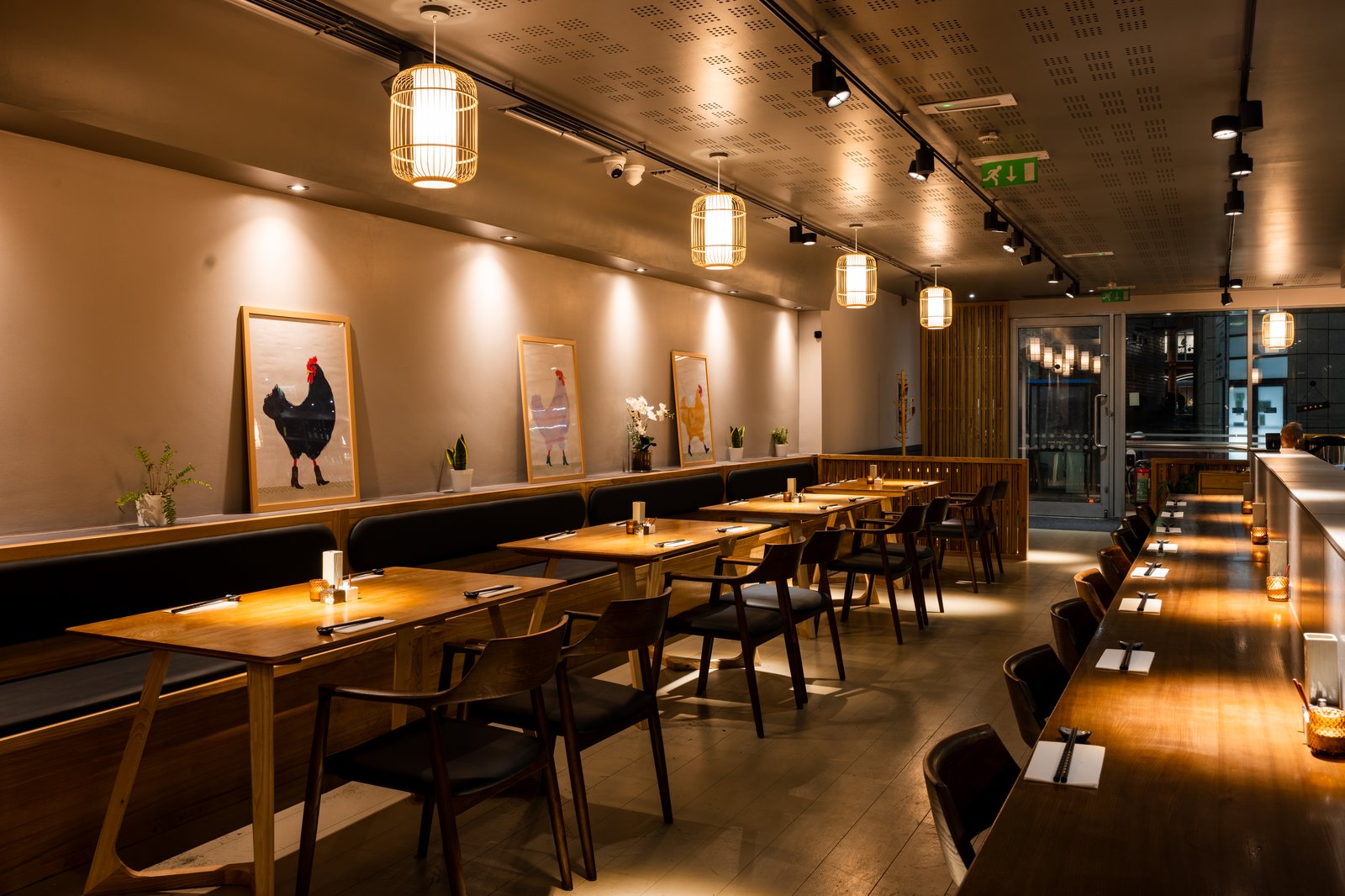
A Tokyo back-alley counter, re-imagined beneath the eaves of Fetter Lane.
We opened in 2024 with a simple ambition: to serve the yakitori and sushi we missed from Tokyo, cooked with the produce we have come to love in Britain. Eight seats at the counter — facing the grill and the sushi cutting block. A dining room seating forty more, across small and large tables.
Our chickens arrive whole, slow-reared and free-range, from Fosse Meadows in Leicestershire. We break down each bird by hand and work our way from beak to tail — seventeen cuts, each seasoned and grilled differently over white-ash binchotan charcoal. Nothing is wasted. Nothing is hurried.
At the counter, our Tokyo-trained sushi chef works in the Edomae tradition: fish aged, cured, marinated — coaxed toward its fullest flavour before it meets the rice. The omakase is short and precise. The rice, warm; the nori, freshly toasted.
Around all this, an izakaya — a Japanese pub of sorts — with carefully chosen sake, shochu and a short list of wines picked to sit alongside charcoal and fish. Low wood, soft light, the sound of skewers turning.
板前A short note on the fish
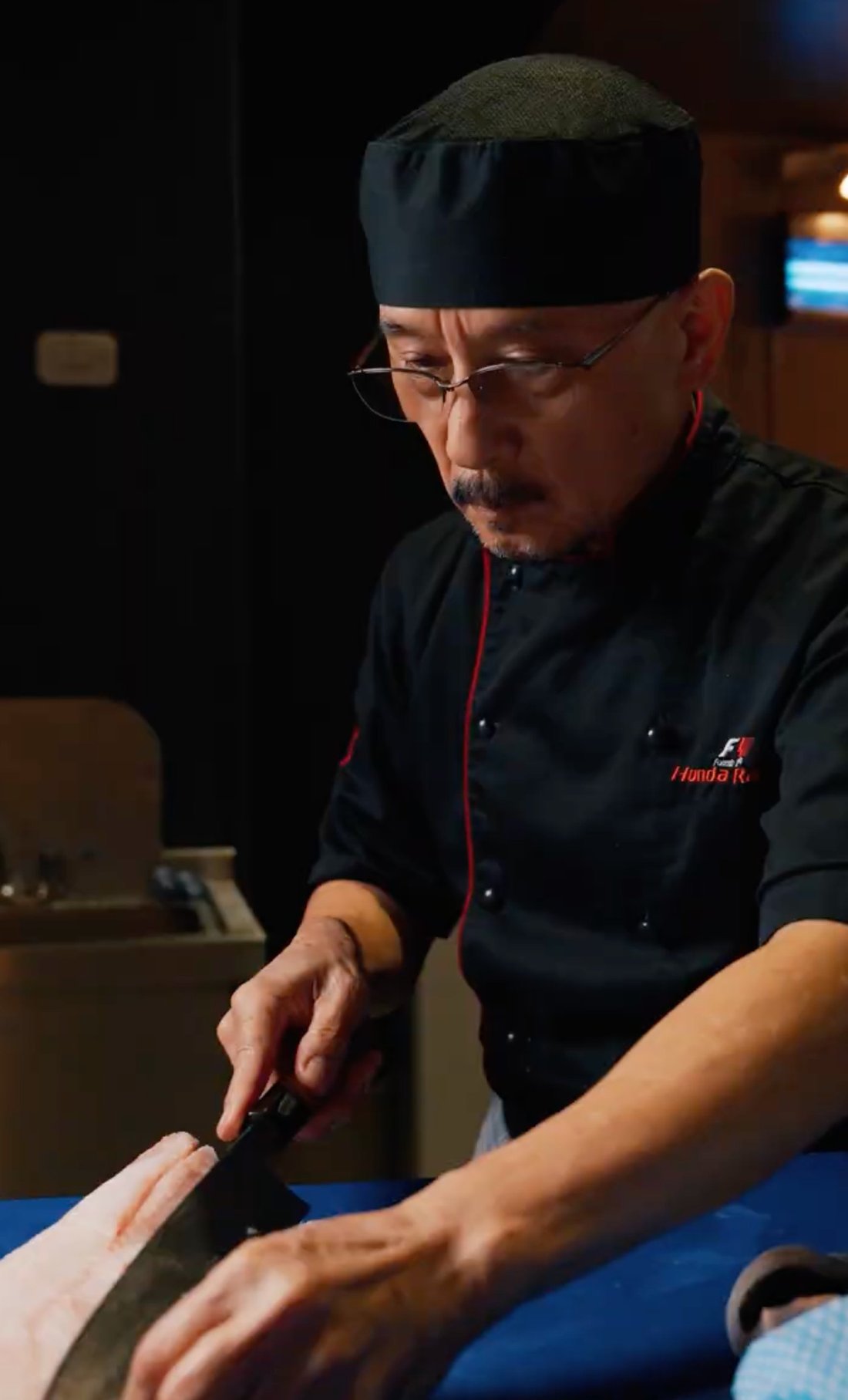
Our head sushi chef, Shunji Irokawa, has spent more than twenty-five years in Japanese kitchens. Most recently as head chef at Kyoto Kitchen in Winchester, where his work earned three consecutive Michelin Plates — 2019, 2020 and 2021.
At Hotori he leads the Edomae counter. Fish aged in-house, sometimes for days. Rice hand-formed, warm. Vinegar from Kyoto. The work is quiet; the cuts are exact. Sit at the counter to watch the omakase build, one piece at a time.
職人A short note on fire
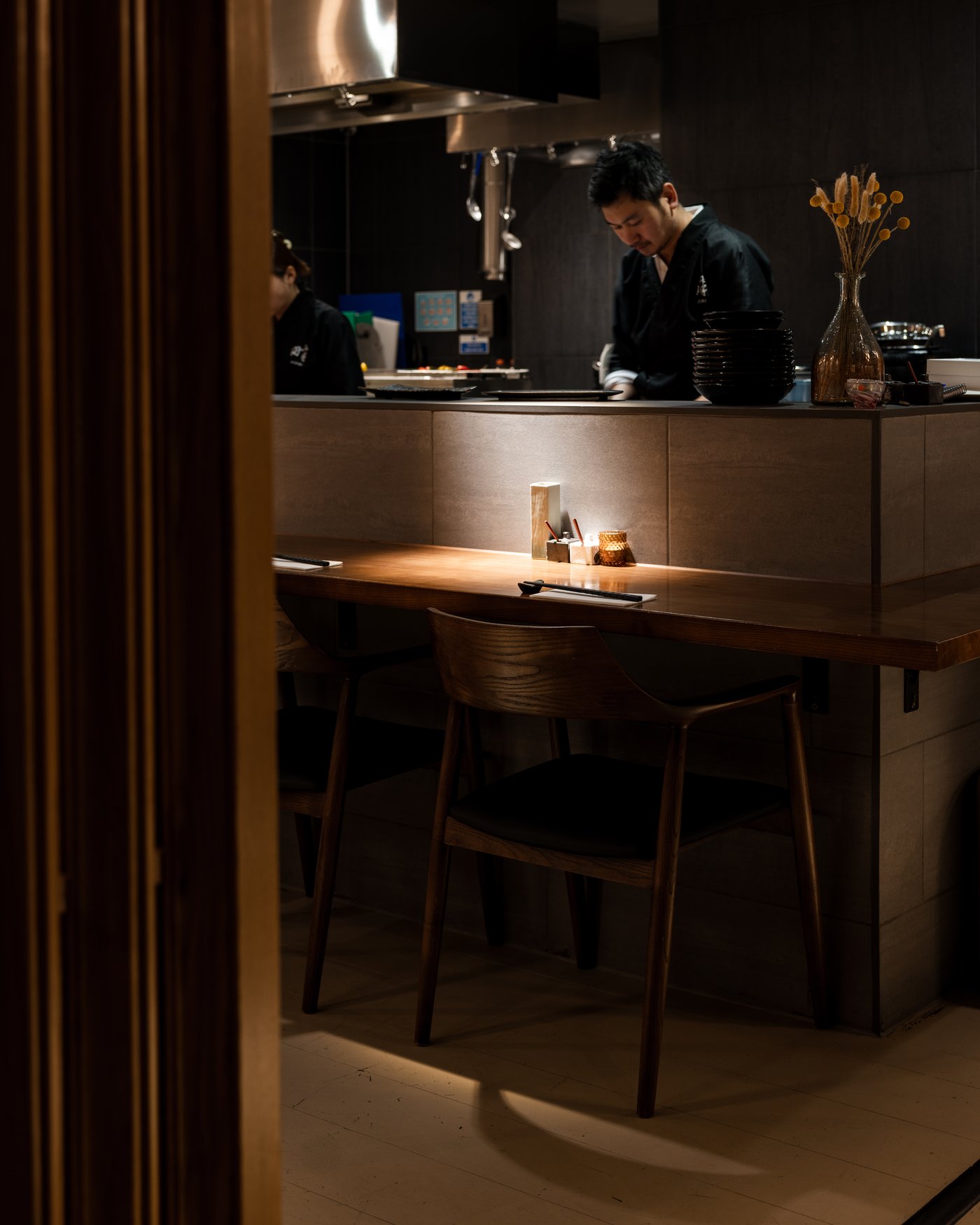
Binchotan is a Japanese charcoal fired from oak at a controlled temperature, until it rings like metal when tapped. It burns almost without smoke, at an even, ferocious heat. It is the reason a good yakitori counter feels nothing like a barbecue: the air is clean, the skin crisps instantly, the flesh stays tender.
We use it exclusively. Every skewer is cooked to order, turned by hand, salted or glazed at the last moment. There is a quiet theatre to it, and we think you should watch — which is why our counter seats face the fire.
Visiting London? See how to find us — landmarks, walking times, and what to expect when you arrive.